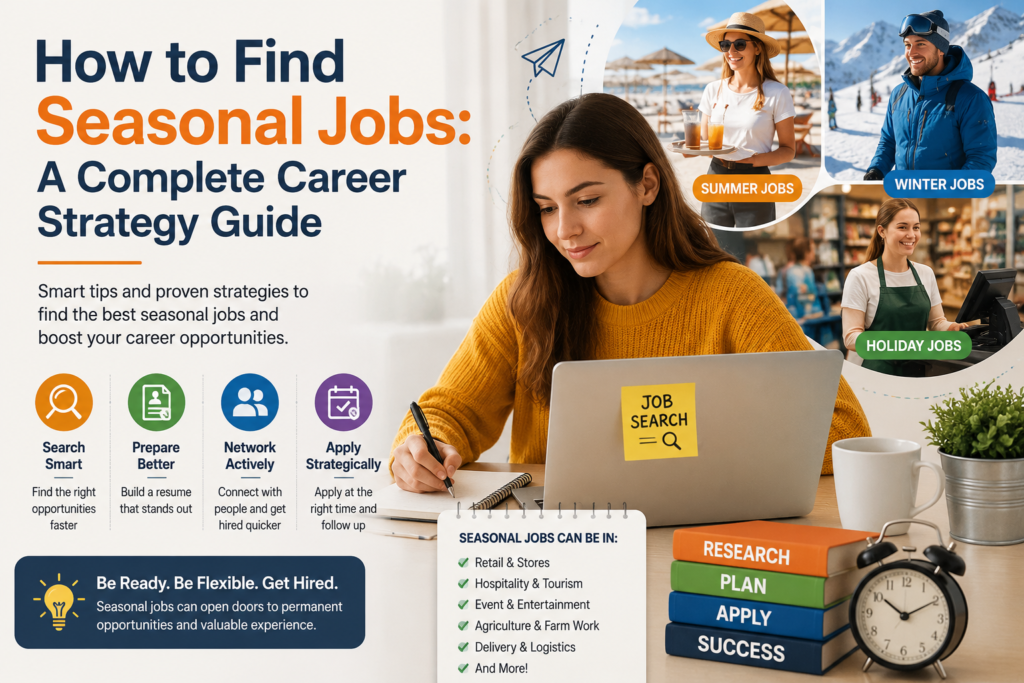
Every year, thousands of people search for seasonal jobs to earn extra income, gain new experience, or bridge the gap between career moves. Whether you’re looking at holiday retail, summer hospitality, agricultural harvest work, ski resort positions, or tax season roles, the hiring process for seasonal jobs moves fast — and being prepared early makes all the difference.
In this guide, we’ll walk through a complete strategy for landing seasonal jobs: where to look, how to get past resume filters, how to write a cover letter that stands out, and how to handle the most common interview questions.
Where to Search for Seasonal Jobs
Not all job boards are equally effective for temporary jobs and temporary employment. In fact, some platforms specialise almost entirely in short-term jobs, holiday jobs, and part-time seasonal jobs, which makes them far more efficient than general job boards. Here are several places worth prioritising:
- WorkAlert.live – A growing platform focused on surfacing timely job alerts, making it an efficient starting point for seasonal jobs since new postings are delivered directly rather than requiring constant manual searching.
- Company career pages – Major retailers, resorts, and delivery services often post holiday hiring and winter jobs directly on their own sites weeks before third-party boards catch up. This is especially true for Royal Mail Christmas recruitment, since Royal Mail seasonal jobs and Royal Mail Christmas vacancies open early and fill quickly each year.
- Indeed with seasonal filters – Searching terms like “seasonal jobs near me,” “summer jobs near me,” or “Christmas jobs” with the “temporary” filter applied surfaces highly relevant listings.
- Snagajob – Particularly strong for retail, food service, and other hourly seasonal jobs.
- CoolWorks – Focused specifically on seasonal ski jobs, national park work, and outdoor seasonal roles, including housing-included positions like jobs at summer camps.
- Major employer career pages – Big-name employers post huge volumes of seasonal roles each year, including Amazon seasonal jobs and amazon hiring seasonal listings, Target seasonal jobs, target seasonal hiring, and target careers seasonal, UPS seasonal jobs and UPS seasonal positions, and Tesco seasonal jobs in the UK. Some hospitality and resort brands, such as Four Seasons careers (sometimes searched as “fourseason careers” or “fourseason job”), also bring on seasonal staff for peak travel periods.
Since seasonal hiring often happens in short bursts, checking these platforms consistently — rather than just once — significantly increases your chances of catching new postings early.
Resume Keywords and Skills for Seasonal Roles
Before a human ever reviews your resume, many companies run it through an ATS (Applicant Tracking System) that scans for specific keywords. Therefore, tailoring your resume to reflect the seasonal jobs you’re applying for is essential. Consider including:
- Availability and flexibility — explicitly mention your ability to work evenings, weekends, or peak hours during holiday hiring periods.
- Reliability and punctuality — seasonal employers prioritise dependability above almost everything else, given the short training window.
- Customer service — relevant for most temporary work in retail, hospitality, and tourism.
- Physical stamina / ability to lift [weight] — important for warehouse, retail stocking, or agricultural harvest roles.
- Team collaboration under pressure — highlights your ability to perform well during high-volume, fast-paced peak season jobs.
Additionally, matching the exact phrasing from the job posting (for example, “seasonal associate” instead of just “team member”) further improves your chances of passing ATS filters.
A Cover Letter Template for Seasonal Hiring Managers
Seasonal hiring managers typically review a high volume of applications in a short window, so a concise, direct cover letter tends to perform better than a lengthy one. Here’s a simple, adaptable template:
Dear [Hiring Manager’s Name],
I’m excited to apply for the [role] position for [season/period] at [Company Name]. I’m fully available during [specific dates/hours], including weekends and peak hours, and I bring [relevant skill/experience] to the role. I understand the importance of reliability during busy seasonal periods, and I’m committed to being a dependable member of your team from day one. I’d welcome the opportunity to discuss how I can contribute this season.
Sincerely, [Your Name]
Notice how the template leads with availability and reliability — the two qualities seasonal hiring managers care about most, since short-term jobs leave little room for training delays or scheduling gaps.
Common Interview Questions for Seasonal Jobs
Once your resume and cover letter get you in the door, interviews for contract jobs and full-time seasonal jobs tend to follow a fairly predictable pattern. Here are three of the most common questions, along with how to approach them:
- “Are you available to work [specific dates], including holidays and weekends?” Be direct and specific. Vague answers raise red flags for seasonal employers, since scheduling reliability is often the deciding factor between candidates. If there are dates you’re unavailable, mention them upfront rather than after being hired.
- “Why are you interested in a temporary or seasonal position?” Whatever your reason — extra income, industry exploration, or a scheduling fit — frame it positively and tie it to your interest in the specific role or company, rather than treating it as a fallback option.
- “How do you handle high-pressure, fast-paced environments?” Seasonal jobs, particularly during holiday hiring and peak season jobs, often involve sudden rushes of customers or orders. Use a brief, specific example from past experience that demonstrates you can stay organised and calm under pressure.
Who Hires for Seasonal Jobs
Seasonal jobs span far more than retail alone. Common categories include:
- Festive and holiday roles – festive jobs and Christmas-period retail or delivery work
- Summer roles – temporary summer jobs, summer temp jobs, summer temp work, and jobs at summer camps
- Educator-friendly roles – summer holiday jobs for teachers, ideal for those with time off during school breaks
- Delivery and logistics – UPS seasonal jobs, Royal Mail seasonal work, and warehouse roles that ramp up sharply around the holidays
- Retail giants – Target seasonal work, target seasonal employment, target seasonal positions, and target seasonal workers, alongside Amazon and Tesco seasonal hiring
- Outdoor and hospitality – seasonal ski jobs, resort work, and hospitality roles tied to tourist seasons
Final Thoughts
Landing seasonal jobs comes down to timing, preparation, and clear communication. As soon as hiring windows open — whether for summer jobs, winter jobs, or festive season jobs — apply early, tailor your resume with the right keywords, and lead with your availability in every conversation. With the right strategy in place, seasonal jobs can turn into a reliable source of income and, in many cases, a stepping stone to longer-term opportunities.
If you’re actively applying and want personalised feedback on your resume or interview approach for a specific seasonal role, reach out for a quick consultation — a second set of eyes often catches what’s easy to miss when you’re applying under a deadline.