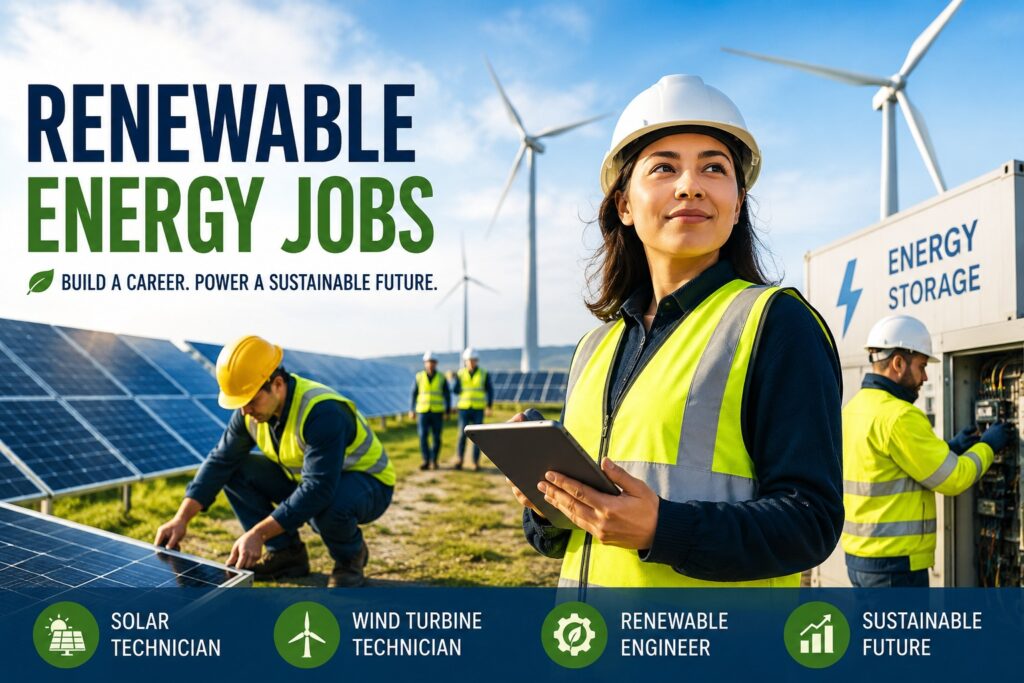
The transition toward cleaner energy is creating new career opportunities across the global energy industry. From solar farms and wind projects to battery storage and modern electricity grids, companies need skilled workers to build, operate, maintain, and manage clean energy systems.
For students, experienced professionals, and people considering a career change, renewable energy jobs offer a range of career paths with different education, training, and experience requirements. The industry includes both hands-on technical positions and professional roles in engineering, project management, finance, environmental compliance, sales, and administration.

Why Are Renewable Energy Jobs Growing?
Investment in solar power, wind energy, energy storage, and electricity infrastructure is creating demand for workers who can support the development and operation of clean energy projects.
Utilities and energy companies are also modernizing electricity networks as energy systems become more connected and technology-driven. This can create opportunities for technicians, engineers, analysts, project managers, construction professionals, and other specialists.
The growth of the sector extends beyond technical positions. Renewable energy companies also need professionals in logistics, finance, human resources, marketing, sales, environmental management, and administration. As the energy transition continues, the clean energy workforce is becoming increasingly diverse.
7 Renewable Energy Careers to Consider
There are many career paths within the renewable energy industry. Some popular options include:
1. Solar Technician
A solar technician installs, inspects, tests, and maintains photovoltaic systems for residential, commercial, and large-scale solar projects. The role can be suitable for people who enjoy practical, hands-on work.
2. Wind Turbine Technician
Wind turbine technicians inspect, maintain, troubleshoot, and repair wind turbines. The work can involve outdoor environments, mechanical equipment, electrical systems, and working at significant heights.
3. Renewable Energy Engineer
Renewable energy engineers help design, develop, test, and improve systems used in solar power, wind energy, energy storage, and other clean energy applications. Engineering positions typically require relevant technical education and specialized knowledge.
4. Energy Analyst
Energy analysts examine energy consumption, costs, performance, and other data. Their work can help organizations identify efficiency improvements and make better decisions about energy use.
5. Renewable Energy Project Manager
Project managers coordinate budgets, schedules, contractors, teams, resources, and project requirements. Strong organizational, communication, and leadership skills are particularly valuable in this career.
6. Energy Efficiency Specialist
Energy efficiency specialists help businesses, buildings, and organizations reduce energy consumption and improve operational efficiency. Their work may involve energy assessments, data analysis, recommendations, and efficiency planning.
7. Sustainability Professional
Sustainability professionals can support environmental planning, sustainability reporting, regulatory compliance, resource management, and long-term environmental strategies.
Skills Needed for a Clean Energy Career
The skills required depend heavily on the specific position. Technical roles may require electrical knowledge, mechanical skills, equipment maintenance, safety training, or specialized certifications. Engineering and analytical positions may require mathematics, data analysis, software knowledge, or system-design expertise.
Soft skills are also important. Communication, teamwork, problem-solving, adaptability, attention to detail, and safety awareness can help professionals succeed in both field-based and office-based positions.
Importantly, not every clean energy career requires a four-year university degree. Trade schools, technical programs, certifications, apprenticeships, and practical training can provide entry points into several technical occupations.
How to Start a Career in Renewable Energy
Begin by identifying a career path that matches your interests, education, and existing abilities. Someone who enjoys hands-on work might explore solar installation, electrical work, or wind turbine maintenance. People interested in technology, mathematics, or data may prefer engineering, energy analysis, or other technical roles.
Technical schools, community colleges, certification programs, and apprenticeships can help beginners develop industry-relevant skills. Candidates pursuing professional positions may benefit from a relevant degree, internship, or specialized industry training.
When applying for renewable energy jobs, highlight practical experience, technical coursework, certifications, safety training, and transferable skills. Regularly checking job listings can also help you identify new opportunities and understand which qualifications employers are seeking.
Find Renewable Energy Jobs With WorkAlert
If you’re actively looking for new career opportunities, WorkAlert.live can be another useful resource for discovering job openings across different industries. You can combine job-search platforms with industry-specific research to identify roles that match your skills, experience, and career goals. Keeping your resume updated and checking new listings regularly can help you stay prepared when suitable opportunities become available.
What Is the Future of the Clean Energy Workforce?
Solar power, wind energy, battery technology, and modern electricity networks are likely to remain important areas of the energy transition. As these technologies develop, employment opportunities may also evolve around energy storage, grid modernization, digital monitoring, system maintenance, and climate technology.
For job seekers, adaptability can be an important advantage. Developing technical skills while continuing to learn about emerging technologies can make it easier to respond to changing employer requirements.
The renewable energy industry also includes opportunities beyond traditional energy occupations. Professionals with backgrounds in construction, software, data analysis, finance, logistics, environmental science, and business can potentially transfer their skills into clean energy organizations.
Frequently Asked Questions
What Are the Best Renewable Energy Jobs?
The best option depends on your interests, qualifications, and career goals. Solar and wind technician roles may suit people who prefer hands-on work, while engineering, analysis, sustainability, and project management may be better suited to candidates with specialized education or experience.
Are Renewable Energy Jobs in Demand?
Demand varies by country, region, occupation, and employer. However, continued investment in areas such as solar, wind, energy storage, and electricity infrastructure is creating employment opportunities across different parts of the industry.
What Qualifications Are Needed for a Renewable Energy Career?
Requirements depend on the position. Some technical roles can be entered through trade training, certifications, or apprenticeships, while engineering and advanced analytical positions commonly require relevant academic qualifications or specialized experience.
Can Beginners Enter the Renewable Energy Industry?
Yes. Entry-level opportunities may be available in areas such as installation, maintenance, construction support, operations, and administration. Apprenticeships, technical training, and relevant certifications can help beginners develop practical experience.
Which Clean Energy Career Pays the Most?
Pay varies according to specialization, experience, location, qualifications, and employer. Engineering, management, and highly specialized technical positions can have different earning potential from entry-level roles.
How Can I Start a Clean Energy Career?
Choose a career path, research its requirements, and develop the relevant education, certification, or practical skills. Internships, apprenticeships, technical programs, and entry-level positions can all help you build experience.
Conclusion
Renewable energy jobs provide career opportunities across solar power, wind energy, energy storage, efficiency, engineering, project management, sustainability, and other areas of the clean energy economy.
While qualifications vary between occupations, candidates can improve their prospects by developing relevant technical skills, gaining practical experience, and staying informed about changes in the industry. As clean energy technologies and electricity systems continue to evolve, professionals who remain adaptable and committed to learning can position themselves for a wide range of career opportunities.