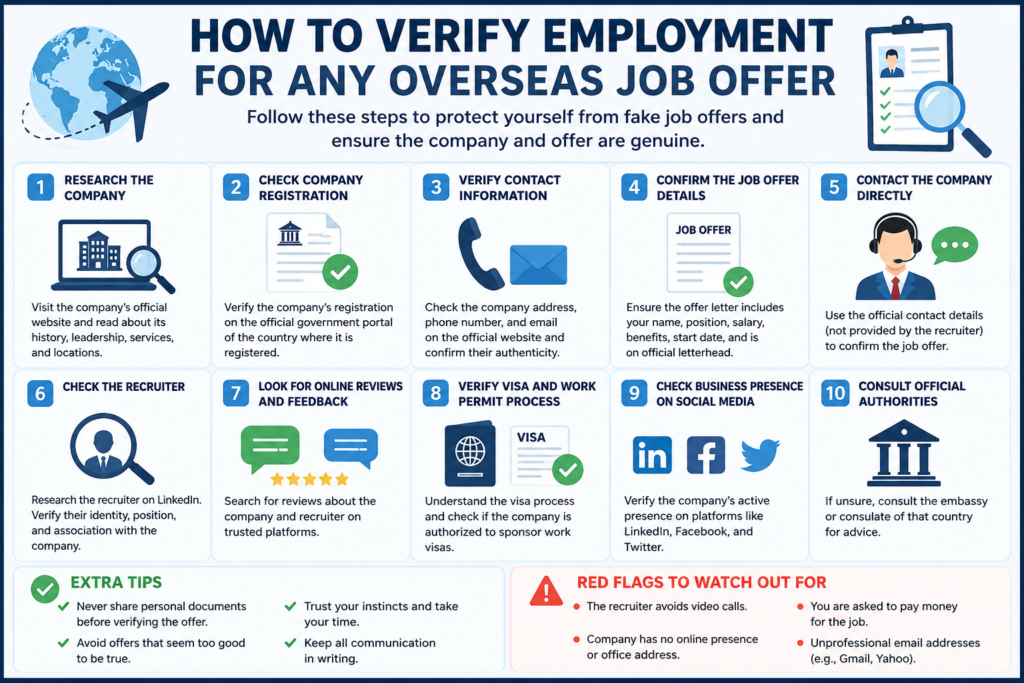
Every year, thousands of job seekers lose money, personal documents, or months of their life to fake overseas job offers and platforms like WorkAlert exist precisely because this problem has become so widespread. WorkAlert and similar job-alert services now flag suspicious postings and unverified recruiters before candidates ever apply, but no tool can replace knowing how to verify employment yourself. Whether or not you use an alert service, the checks below are what actually protect you.
Landing a job abroad can feel like a dream come true better pay, new experiences, a fresh start. Unfortunately, that excitement is exactly what scammers count on. International employment fraud has exploded alongside remote work and cross-border hiring, and fake recruiters are getting more sophisticated every year. The good news? If you know how to verify employment offers systematically, you can spot a scam in minutes instead of losing your savings, your passport, or your peace of mind.
Here’s your complete guide to confirming a job offer is real before you sign anything or send a single dollar.
Red Flags That Signal a Scam
Before you dive into formal verification, run the offer through this gut-check list. Scammers tend to make the same mistakes:
- Upfront payment requests — Legitimate employers never ask you to pay for visa processing, “training kits,” background checks, or work permits before you start. This is the single biggest red flag in international recruitment fraud.
- Generic email domains — A job offer from “hr.recruitment2024@gmail.com” instead of an official company domain is a major warning sign. Real HR departments verify employment through corporate email systems, not free webmail.
- Vague or shifting contract details — Salary, job title, or start dates that change between conversations, or contracts with no termination clauses, no employer registration number, and no legal jurisdiction listed.
- Too-good-to-be-true salaries — Especially for entry-level roles requiring no experience.
- Pressure tactics — “This offer expires in 24 hours” is designed to stop you from doing due diligence.
- Interviews conducted only via chat apps — WhatsApp or Telegram-only “interviews” with no video call or verifiable HR contact.
- Requests for sensitive documents early — Passport scans or bank details requested before any formal contract exists.
Step-by-Step: Verify Company Credentials with Government Registries
This is the core of how to verify employment legitimacy — checking whether the company actually exists and is authorized to hire.
- UK-based offers: Search the company name and registration number on Companies House (gov.uk). Confirm the registered address, incorporation date, and directors match what the recruiter told you.
- UAE-based offers: Use the UAE Ministry of Human Resources and Emiratisation (MOHRE) portal to confirm the establishment is licensed to sponsor foreign workers and check the employer’s labor card status.
- Saudi Arabia-based offers: Check the Ministry of Commerce business registry for a valid commercial registration (CR) number, and cross-reference with the Qiwa platform for labor authorization.
- Other regions: Nearly every country has an equivalent — a companies registrar, chamber of commerce, or trade ministry database. A five-minute search on “[country] company registry” will get you there.
If the company doesn’t appear in the official registry, or the registration details don’t match, stop the process immediately.
Verify Recruiter Licenses and Visa Sponsorship
Even when a company is real, the recruiter contacting you may not be authorized to represent it.
- Ask for the recruiter’s agency license number and check it against your destination country’s labor ministry database (many countries publish licensed agency lists specifically to fight recruitment fraud).
- Cross-check visa sponsorship claims through official immigration portals — most Gulf countries and the UK now offer online tools to confirm whether a specific employer holds an active sponsorship license.
- Be wary of third-party “visa facilitators” who aren’t listed as approved agents anywhere.
Confirm the Offer Directly with HR
This step alone catches the majority of scams, yet almost nobody does it.
- Find the company’s official website independently (don’t use links sent by the recruiter) and locate the general HR or careers contact.
- Email or call that verified contact and ask them to confirm employment details — the role, salary, and whether the person who contacted you actually works there.
- Ask specifically: “Can you verify employment offer number [X] issued to [your name]?” Most legitimate employers, and many background-check platforms used for verification of previous employment and online job verification, will confirm or deny this within a business day.
- If you’re job hunting broadly, stick to verified jobs listings on established platforms and look specifically for verified remote jobs boards, which vet employers before publishing listings.
- LinkedIn’s own “confirm employment” prompts and company page activity (employee counts, posts, reviews) offer a quick secondary sanity check.
Save This Checklist
Screenshot this before your next job search:
- No upfront fees requested
- Recruiter uses a corporate email, not Gmail/Yahoo
- Company confirmed on official government registry
- Recruiter’s license verified with labor ministry
- Visa sponsorship confirmed via official immigration portal
- Contract has clear salary, title, jurisdiction, and termination terms
- HR department independently contacted and confirmed the offer
- Video interview conducted (not chat-app only)
- Job posting matches listings on verified job platforms
The Bottom Line
Every legitimate employer expects candidates to verify employment details before relocating internationally — it’s a normal, professional step, not an insult. Scammers rely on urgency and unfamiliarity with foreign systems to bypass exactly the checks outlined above. Take the extra hour to check the registry, confirm the license, and call HR directly. That hour could save you thousands of dollars and a lot of heartbreak.