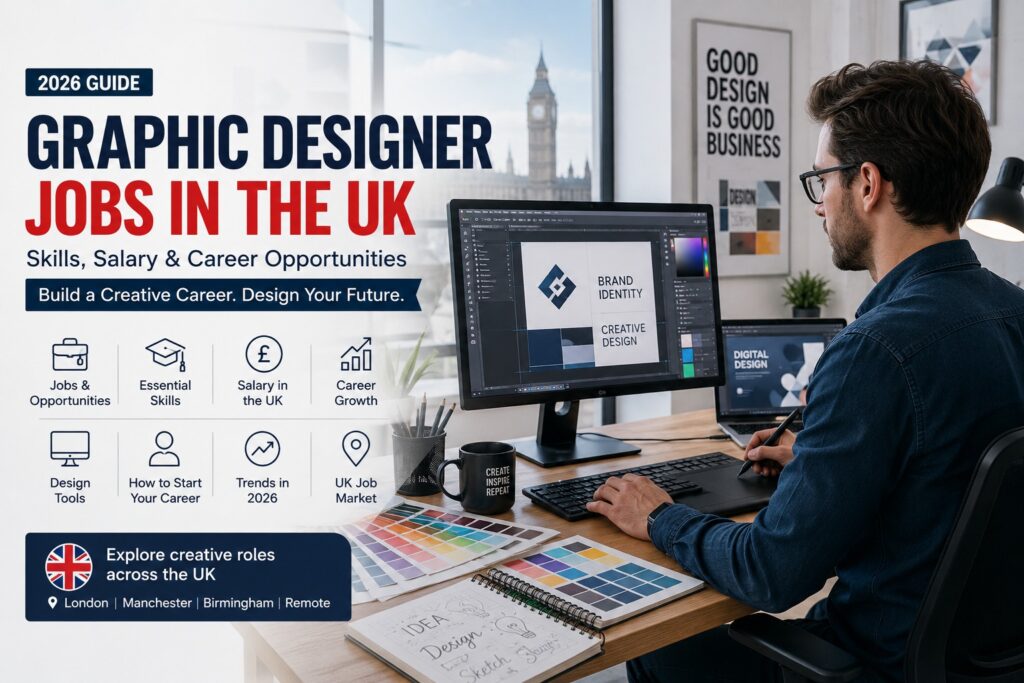
Graphic Designer Jobs UK: Skills, Salary & Career Guide 2026
In 2026, visual communication continues to play an important role in how businesses connect with customers. From websites and social media to advertising campaigns, mobile apps and packaging, companies across the UK rely on strong visual content to communicate their identity.
This has created opportunities for people interested in a graphic design career, whether they want to work for an agency, join an in-house creative team, work remotely or become a freelance designer. Understanding the required skills, career paths and employment options can help aspiring designers make informed decisions about entering the industry.
What Does a Graphic Designer Do?
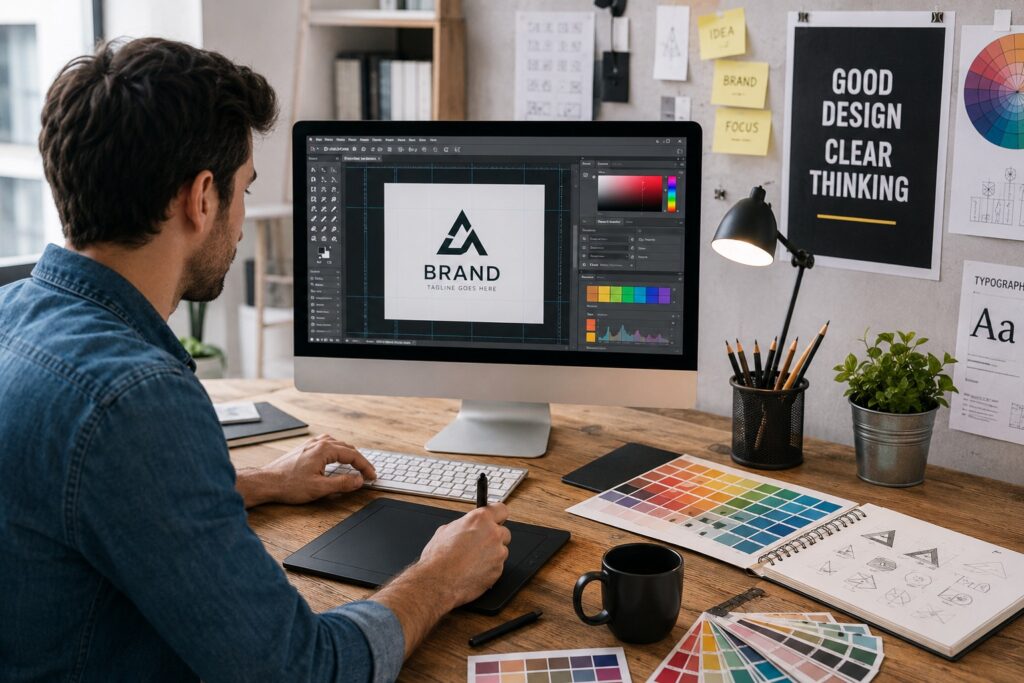
A graphic designer turns ideas, information and brand messages into visual content. Their work can include logos, advertisements, social media graphics, brochures, presentations, packaging, websites and other marketing materials.
The role combines creativity with strategy. Designers need to understand a company’s brand identity, target audience and communication goals before deciding how a project should look and feel.
A professional designer also considers where the content will be used. A social media advertisement, business website and printed brochure may require completely different layouts and visual approaches.
The goal is not simply to create attractive graphics. Effective design should communicate information clearly, strengthen a brand and support a specific business objective.
Essential Graphic Design Skills in 2026
Successful designers need a combination of creative, technical and interpersonal skills. Some of the most valuable graphic design skills include:
- Typography and layout for clear and readable compositions
- Colour theory and visual consistency
- Visual communication and storytelling
- Branding and visual identity development
- Digital design for websites, apps and social media
- Creativity and attention to detail
- Communication and collaboration
- Knowledge of professional design software
- Understanding of current design trends and audience behaviour
Designers should also be comfortable receiving feedback and adapting their work to meet a client’s or employer’s requirements.
As digital platforms continue to evolve, designers who understand both traditional design principles and modern digital workflows can adapt more easily to changing expectations.
Graphic Designer Jobs UK and Career Opportunities
There are several types of graphic design jobs UK employers offer, depending on experience, specialisation and working preferences.
In-House Graphic Designer
An in-house designer works directly for a company or organisation. They may create marketing campaigns, internal communications, website graphics, social media content and branded materials.
This role can be suitable for designers who prefer to develop a deeper understanding of one brand and work closely with an established team.
Design Agency Roles
Agency designers work with different clients and projects. This can provide exposure to a wide range of industries, branding styles and creative challenges.
Agency environments can be fast-paced, making organisation, communication and the ability to meet deadlines particularly important.
Freelance Graphic Designer
A freelance graphic designer UK clients can work independently and accept projects from businesses, agencies and individuals. Freelancing offers flexibility but also requires designers to manage their own pricing, contracts, deadlines, marketing and client relationships.
Remote Graphic Designer
Remote work has also become an important option for creative professionals. Remote graphic designer jobs UK companies can allow designers to collaborate with teams without working from a traditional office.
Other career paths include brand designer, marketing designer, social media designer, UI designer, motion designer and visual designer.
With experience, professionals can progress towards senior designer, art director or creative director positions.
Tools Graphic Designers Should Know
Professional designers use different tools depending on their specialisation and workflow.
Adobe Photoshop is widely used for image editing and digital artwork, while Adobe Illustrator is commonly used for vector graphics, logos and illustrations. Adobe InDesign is particularly useful for editorial layouts, brochures and other document-based projects.
Figma has become an important tool for interface design and collaborative digital projects. Canva is also widely used for creating straightforward marketing and social media content.
However, learning software is only one part of becoming a strong designer. Understanding typography, composition, colour, hierarchy and visual communication is more important than simply knowing how to operate a particular application.
Graphic Designer Salary in the UK and Career Growth
A graphic designer salary UK professionals can expect varies depending on experience, location, specialisation, employer and portfolio quality.
Entry-level designers generally focus on building practical experience and developing a strong portfolio. As their skills improve, they may progress into specialist or senior positions with greater responsibilities.
Location can also influence opportunities. Major creative centres such as London, Manchester, Birmingham and other UK cities have established creative, marketing and digital industries.
Specialist skills can also improve career prospects. Areas such as UI design, motion graphics, digital product design, branding and creative direction can open additional opportunities.
Freelancers have a different earning structure because income depends on project fees, client demand, workload and repeat business. Some professionals choose freelancing because of the flexibility it provides, while others prefer the stability of an in-house position.
How to Start a Graphic Design Career in the UK
If you want to enter the UK graphic design industry, a practical approach can make the process easier.
1. Learn Design Fundamentals
Start with typography, colour theory, composition, hierarchy, spacing and visual communication.
2. Develop Software Skills
Learn relevant tools such as Photoshop, Illustrator, InDesign and Figma based on the type of design work you want to pursue.
3. Create Practical Projects
Personal projects can demonstrate your creativity even if you have limited professional experience. Try creating a fictional brand identity, social media campaign, website concept or advertising project.
4. Build a Strong Portfolio
A design portfolio is often one of the most important parts of a designer’s job application. Include your strongest projects and explain the thinking behind your design decisions.
5. Build an Online Presence
A professional portfolio website or suitable creative platform can make it easier for employers and potential clients to discover your work.
6. Apply for Entry-Level Opportunities
Look for internships, junior designer roles, apprenticeships, freelance projects and entry-level graphic design jobs UK employers advertise.
7. Continue Learning
Design tools, digital platforms and creative workflows continue to change. Keeping your skills updated can help you remain competitive.
Graphic Design Trends in 2026
Graphic design continues to evolve alongside technology and changing audience expectations.
AI-assisted design tools are becoming part of many creative workflows. Designers may use AI for brainstorming, generating concepts, editing images and speeding up repetitive production tasks.
Other trends include motion graphics, bold typography, personalised content, interactive experiences, minimalist visual systems and more flexible brand identities.
However, following every trend is not necessarily a good design strategy. Designers should understand why a particular style works and whether it fits the brand, audience and purpose of a project.
The strongest professionals combine new technology with fundamental design principles and creative judgement.
Building a Long-Term Graphic Design Career
A successful graphic design career UK professionals can build is not limited to producing individual graphics. Over time, designers can develop expertise in branding, digital products, advertising, marketing, UX/UI, motion graphics or creative leadership.
Strong communication skills can also become increasingly valuable as designers take responsibility for projects and work with marketers, developers, copywriters and business teams.
Developing a clear specialisation while maintaining broad design knowledge can help professionals identify opportunities and create a sustainable career path.
Explore More on Workalert.live
If you are looking for career guidance and employment opportunities, Workalert.live provides resources covering job searches, career development, hiring trends and professional skills.
You can also explore opportunities related to creative work, remote employment and entry-level positions. These resources can help job seekers understand different career paths and identify opportunities that match their skills and experience.
FAQs
1. What does a graphic designer do?
A graphic designer creates visual content such as logos, advertisements, branding materials, social media graphics, presentations and other digital or printed assets to communicate information and represent a brand.
2. Are graphic designer jobs in demand in the UK in 2026?
UK businesses continue to use visual content across websites, social media, advertising, branding and digital products. This creates opportunities for designers who have relevant skills, a strong portfolio and an understanding of modern digital platforms.
3. What skills do you need to become a graphic designer?
Important skills include typography, colour theory, layout, visual communication, branding, creativity, attention to detail and proficiency with relevant design software such as Photoshop, Illustrator or Figma.
4. Can I work as a freelance graphic designer in the UK?
Yes. Freelancers can work with businesses, agencies and individual clients on a project basis. Freelancing can provide flexibility, although designers are responsible for finding clients, managing projects and handling their own business administration.
5. Can graphic designers work remotely in the UK?
Yes. Some companies and agencies offer remote or hybrid creative positions. Remote work can allow designers to collaborate with teams using digital communication and design platforms.
6. How can I get my first graphic design job?
Start by learning fundamental design principles, developing software skills and creating a portfolio that demonstrates your abilities. Internships, personal projects, freelance work and junior positions can all help you gain practical experience.
7. Can graphic designers progress to senior positions?
Yes. With experience, designers can move into senior designer, art director, creative director or specialist positions in areas such as branding, UI design, motion graphics and digital product design.
Conclusion
Graphic design remains a flexible and creative career option in the UK in 2026. From agency and in-house positions to freelance and remote opportunities, designers can choose a career path that matches their interests and professional goals.
The key to building a successful career is not simply learning design software. Strong fundamentals, creative thinking, communication skills, practical experience and a well-presented portfolio can all contribute to long-term success.
As technology and digital content continue to evolve, designers who combine creativity with modern tools and strategic thinking can position themselves for new opportunities across the UK’s creative and digital industries.