By-Elections: What They Are, How They Work, and Why They Matter
By-Elections are an important part of the democratic process. They give voters an opportunity to choose a new representative when an elected position becomes vacant before the next general election. Although they usually involve fewer seats than a general election, they can still attract considerable public attention and sometimes influence the direction of political debate.
For many people, the process can seem unfamiliar because national or general elections receive much more attention. Understanding why these elections happen, who can vote, and how the results can affect a government makes the process easier to follow.
What Is a By-Election?
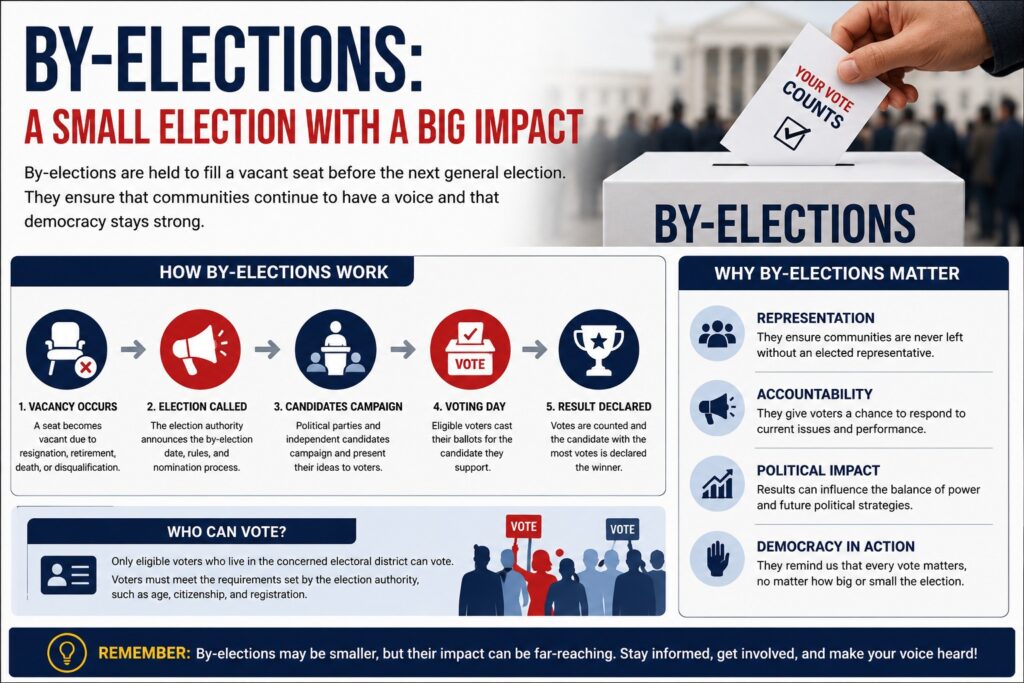
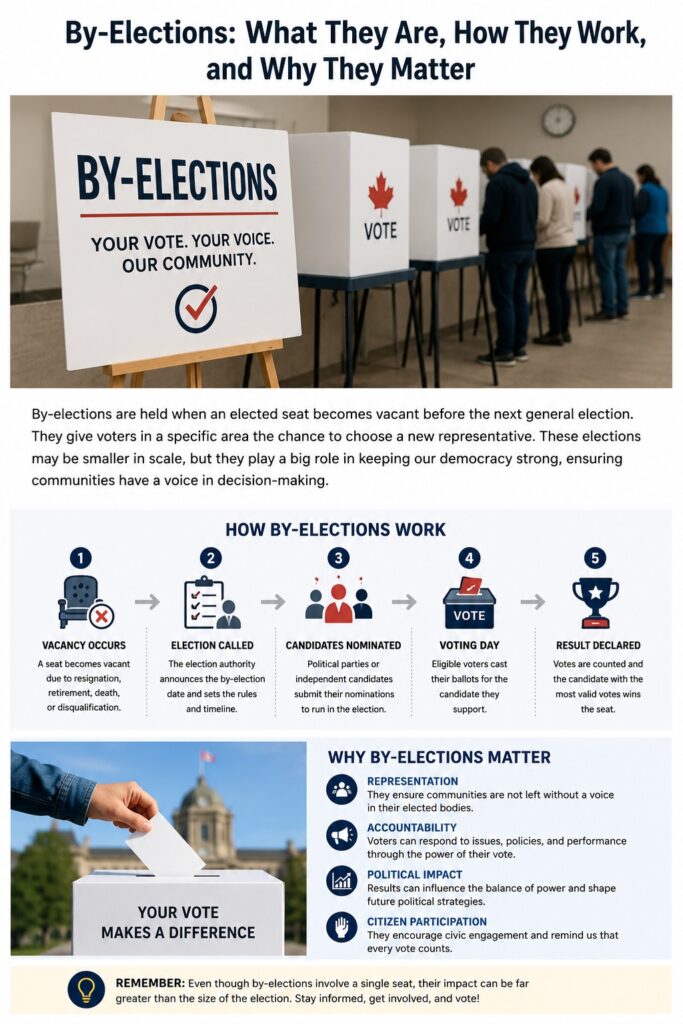
A by-election is held when an elected seat becomes vacant between general elections.
A vacancy can happen for several reasons. An elected representative may resign, retire, or become unable to continue serving in the position. In some circumstances, the law may also require a new election for the vacant seat.
Rather than leaving the area without an elected representative until the next general election, a separate vote is held. People living in that particular electoral district then have the opportunity to select someone new.
The exact rules and timing can vary depending on the country and its electoral system.
Why Are By-Elections Held?
The main purpose is to fill an empty elected position.
In a representative democracy, people expect their communities to have someone representing them in the legislature. When that position becomes vacant, an election provides a way for local voters to choose a replacement.
This also gives political parties an opportunity to nominate candidates and present their ideas to voters. Independent candidates may also take part, depending on the electoral system.
Although the election is limited to a particular area, the campaign can sometimes receive wider attention.
How Does the Process Work?
The process generally begins after an elected seat officially becomes vacant.
An election authority establishes the relevant dates, including the nomination period and voting day. Political parties select or nominate their candidates, while independent candidates can follow the required process to appear on the ballot.
Candidates then campaign within the electoral district. They may discuss local concerns, national issues, public services, economic matters, and other topics that are important to voters.
On voting day, eligible voters cast their ballots for the candidate they support. Once voting ends, the ballots are counted and the candidate who meets the applicable electoral requirements is declared the winner.
Who Can Vote?
Voting eligibility depends on the laws of the country or jurisdiction holding the election.
Generally, voters must meet requirements such as citizenship, minimum age, and residence within the relevant electoral district. Some places may have additional registration requirements or rules concerning identification.
Because these rules differ between jurisdictions, voters should check information provided by their official election authority before voting.
Knowing where and when to vote is also important. Voting locations, advance voting, postal voting, and other options may be available depending on the circumstances.
How Are Candidates Chosen?
Political parties normally select a candidate before the campaign begins.
The selection process can differ from one party to another. Some parties may hold local nomination meetings, while others use an internal selection process.
Independent candidates do not represent a political party and can campaign on their own platform.
For voters, the important point is to understand who is on the ballot and what each candidate stands for. Looking beyond campaign slogans can help people make a more informed decision.
Local Issues Can Matter a Lot
One interesting feature of these elections is the importance of local concerns.
A general election may involve nationwide issues, but a smaller election can place greater attention on matters affecting a particular community. Local transportation, housing, education, healthcare, employment, infrastructure, and community services may become major campaign topics.
Candidates often have to connect broader political ideas with issues that voters experience in their everyday lives.
This can make the campaign especially relevant to people living in the affected district.
Can the Result Affect a Government?
Sometimes, yes.
The impact depends on how many seats the governing party and opposition parties hold before the vote. In a closely divided legislature, winning or losing one seat can affect the balance of power.
Even when a single result does not change who controls the government, it can still be politically significant. A strong result may give a party momentum, while a disappointing result can lead to questions about its policies or leadership.
However, one election should not automatically be treated as a prediction of what will happen at the next general election. Local factors, candidates, turnout, and current events can all influence the result.
Voter Turnout
Turnout can be different from what is seen during a general election.
Some voters may pay less attention because the election involves only one constituency or district. Others may be highly motivated because they feel particularly connected to the local issues or candidates.
When fewer people vote, individual votes can become especially important.
This is one reason election authorities and community organizations often encourage eligible voters to understand the process and participate.
Why Should People Pay Attention?
Even though the election may be limited to one area, it can provide useful information about public opinion.
Political parties often study the result carefully. They may look at voter turnout, changes in support, and the issues that appeared to matter most during the campaign.
For local residents, the outcome directly determines who will represent their area.
For the wider public, the campaign can also provide an opportunity to understand how political parties are responding to current concerns.
By-Elections vs General Elections
The biggest difference is the scale.
A general election normally involves many or all electoral districts, allowing voters across a country or jurisdiction to choose representatives. A by-election usually concerns one vacant seat, although multiple vacancies can sometimes lead to several elections around the same period.
The campaign can therefore be smaller, but that does not necessarily mean it is unimportant.
Another difference is the reason for the vote. A general election is part of the regular electoral cycle, while a by-election is normally triggered by a vacancy.
Frequently Asked Questions
What is a by-election?
A by-election is a vote held to fill an elected position that has become vacant before the next general election.
Why does a seat become vacant?
A seat can become vacant because an elected representative resigns, retires, dies, or becomes unable to continue serving, depending on the relevant laws.
Is everyone in the country allowed to vote?
Usually, only eligible voters who live within the electoral district involved in the election can vote for that particular seat.
Are independent candidates allowed to participate?
In many electoral systems, independent candidates can stand for election if they meet the applicable nomination requirements.
Can the result change the government?
It can, particularly when the legislature is closely divided. However, the political impact depends on the existing distribution of seats.
Is a by-election the same as a general election?
No. A general election normally covers a much larger number of seats, while a by-election is held to fill a specific vacant position.
Why can turnout be lower?
Because the election involves a smaller area, some voters may pay less attention or feel that the result has less impact on them. Local interest and campaign intensity can also affect turnout.
Final Thoughts
By-Elections may involve only a single electoral district, but they remain an important part of representative democracy. They allow communities to choose a new representative when a seat becomes vacant rather than waiting for the next general election.
For voters, understanding the candidates, local issues, voting requirements, and election process can make participation more meaningful. For political parties and observers, the results can provide useful insight into current public opinion.
The most important thing is to look at each election on its own terms. Local circumstances can have a major influence on the outcome, so the result should be understood in the context of the community, candidates, and issues involved.