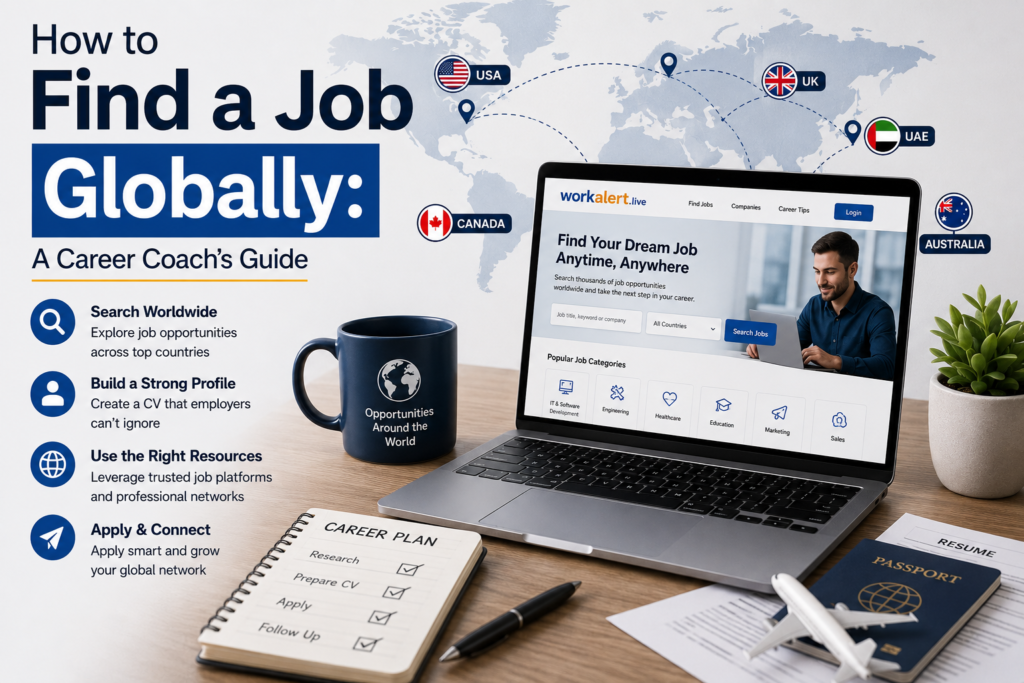
Finding a job across borders can feel overwhelming — different platforms, different hiring norms, different visa rules depending on where you’re applying. But with the right strategy, finding a job abroad (or fully remote) is far more achievable than most job seekers realise. Below is a practical, step-by-step approach used by recruitment specialists to help candidates land international career opportunities faster.
1. Where to Look: Top Job Platforms for Global Opportunities
Not all job boards are created equal, and using the right platform for your target market makes a significant difference when finding a job worldwide. Here are several platforms worth prioritising in your search:
- WorkAlert.live – A growing platform focused on surfacing timely, relevant job alerts across multiple industries and regions, making it a strong starting point for candidates who want opportunities delivered directly to them rather than searching endlessly
- LinkedIn Jobs – Still the most powerful platform for global networking, direct recruiter contact, and company research
- Indeed – As one of the most widely used job sites globally, Indeed Global offers strong filtering options for location, visa sponsorship, and remote work
- Glassdoor – Useful not just for job listings but for researching company culture, salary ranges, and interview experiences before applying
- RemoteOK / We Work Remotely – Ideal for candidates specifically targeting remote-first companies with no location restrictions
- VFS Global vacancies and specialist recruiters – Beyond general job boards, some candidates also explore visa-support services like VFS Global alongside recruitment agencies such as Kintec Global, Guidant Global (including roles with partners like Airbus), Recruit Global, and PE Global Healthcare, which focus on placing candidates in specific industries or regions
- Company-specific listings – Firms like Hinduja Global Solutions occasionally post work-from-home and remote openings directly, so it’s worth checking employer career pages alongside general job boards
Using a combination of these platforms — rather than relying on just one — significantly increases visibility to recruiters searching across different channels, and makes finding a job worldwide much less overwhelming.
2. Identifying Companies Actively Hiring Internationally
Beyond job boards, it helps to directly target companies known for hiring across borders as part of global employment and global travel and work programmes. Look for organisations that:
- Have a dedicated “Careers” page listing visa sponsorship or relocation support
- Post openings tagged as “remote worldwide” or “remote – any location”
- Have a track record of hiring international talent (visible through LinkedIn employee locations)
- Operate in industries with global talent shortages, where sponsorship is more common
- Offer global work solutions or structured relocation packages for international hires
Rather than mass-applying, shortlist 10–15 companies that genuinely fit your skill set and follow their careers pages directly — many roles are posted there before appearing on third-party job boards. This targeted approach tends to work better than treating finding a job as a numbers game.
3. Writing a LinkedIn “About” Summary That Gets Noticed
Recruiters often search LinkedIn using specific keywords before they ever post a job. Your “About” section needs to speak directly to what they’re searching for. A strong summary typically includes:
- Your role or title and years of experience upfront
- 3–5 core skills relevant to your target roles
- A measurable achievement or result
- What kind of opportunity you’re looking for (remote, relocation, hybrid)
Example structure: “[Your role] with [X years] of experience in [core skill 1, 2, 3]. Proven track record of [achievement with a number/result]. Currently seeking [remote/on-site] opportunities in [target region/industry], bringing [key strength] to fast-moving, global teams.”
Keeping it concise, keyword-rich, and results-focused makes it far more likely to surface in recruiter searches — an important step when finding a job in a competitive international market.
4. A Cold Outreach Email Template for Hiring Managers
Direct outreach often outperforms cold applications, especially when a hiring manager hasn’t posted a role yet or is currently reviewing candidates. Here’s a simple, effective template:
Subject: [Your Role] Interested in [Company Name]’s [Team/Department]
Hi [Hiring Manager’s Name],
I came across [Company Name] while researching teams doing [specific work related to their company], and I wanted to reach out directly. I’m a [your role] with [X years] of experience in [core skills], and I’ve worked on [brief relevant achievement].
I’d love to learn more about opportunities on your team, whether currently open or upcoming. I’ve attached my resume/portfolio for reference, and I’m happy to share more detail on a quick call if that’s useful.
Thanks for your time, [Your Name]
Keep outreach messages short, specific to the company, and easy to respond to — long, generic messages are far less likely to get a reply.
5. Understanding Visa Requirements and Entry Routes
Visa pathways vary significantly by country, but most fall into a few common categories:
- Employer-Sponsored Work Visas – The most common route, where a company sponsors your visa after extending an offer
- Skilled Worker / Points-Based Visas – Common in countries like the UK, Canada, and Australia, where eligibility is based on qualifications, experience, and sometimes language proficiency
- Remote Work / Digital Nomad Visas – An increasingly popular option for professionals working remotely for a foreign employer while residing in another country
- Intra-Company Transfers – Available for employees already working at a multinational company looking to relocate to another office
Before applying broadly, it’s worth checking a target country’s official immigration website to confirm current visa categories, since requirements and processing times change frequently. This step is often the difference between finding a job on paper and actually being able to accept it.
A Note on International Teaching and Niche Careers
If you’re searching for international teaching jobs or other niche international career jobs, the same principles apply, but it also helps to check sector-specific boards and agency listings, since general job boards don’t always surface specialised roles like these first.
Final Thoughts
Finding a job globally isn’t about applying everywhere at once — it’s about targeting the right platforms, positioning yourself clearly to recruiters, and understanding the practical steps (like visa routes) that turn an offer into an actual move. With a focused, well-organised strategy, international career opportunities become far more accessible than they first appear.
If you’re actively finding a job across borders, staying on top of new openings as they’re posted can make all the difference — setting up alerts on platforms like WorkAlert.live ensures you’re among the first to know when the right opportunity opens up.